The technical name for Intumescent Fireproofing/Intumescent Coating/Intumescent Paint is Intumescent Fire-Resistive Material (IFRM). It is used as part of a building’s passive fireproofing strategy. They can be applied to structural members as an aesthetically pleasing fireproofing product.
Passive fire protection products, such as fireproofing, is used to delay (or even prevent) the failure of steel and concrete structures that are exposed to the high temperatures found during a fire. They do this by thermally insulating the structural members to keep them below the temperatures that cause failure.
SFRM is composed of cement or gypsum and often contains other materials like mineral wool, quartz, perlite, or vermiculite. The gypsum or cement makes up the majority of the solution and is selected because it hardens as it dries. The other materials are used to help lighten the solution or to add air as in insulator. Chemical hardeners are sometimes used to either speed up hardening or to make the final fireproofing harder than normal.
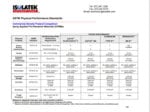
Regulations and Codes Related to SFRM. The fire resistance of structures to which SFRM are applied are measured and defined by fire endurance tests such as ASTM E119, Standard Test Methods for Fire Tests of Building Construction and Materials.
The characteristics of SFRM are determined according to ASTM E736, Standard Test Method for Cohesion/Adhesion of Sprayed Fire-resistive Materials Applied to Structural Members and ASTM E605, Standard Test Methods for Thickness and Density of Sprayed Fire-Resistive Material Applied to Structural Members, among other codes.
The International Building Code 2018 discusses SFRM in Section 704.13. However, all of IBC Section 704 covers the Fire-Resistance Rating of Structural Members, which can be provided by spray applied fireproofing.
Spray Applied Fireproofing (SFRM) – archtoolbox.com source of information